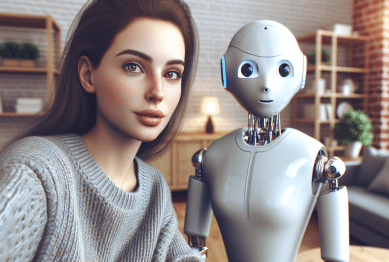


Quantum computing is reshaping tech as we know it, offering speeds and capabilities once thought impossible. Explore how this revolutionary tech is influencing cybersecurity, scientific discovery, and even future AI. Find out what’s real, what’s hype, and what’s coming next in this rapidly evolving field.

What Quantum Computing Really Means
Quantum computing is often described as the next leap for computation—something set to transform everything from cryptography to material science. But how does it differ from the devices found in homes and offices today? Traditional computers rely on bits, which hold values of zero or one. Quantum computers, though, use quantum bits or ‘qubits.’ Thanks to principles like superposition, a single qubit can exist in multiple states at once, unlocking a vast new realm of processing power.
This means quantum computers can tackle problems that would be impossible or take unimaginably long times on even the most advanced classical supercomputers. Think factoring enormous numbers (influencing encryption), simulating molecules for advanced drug discovery, or optimizing huge logistical operations. Many experts emphasize how even with just a few hundred qubits, a quantum device could outperform classical giants at specific tasks—a concept known as ‘quantum advantage’ (Source: https://www.ibm.com/quantum-computing/what-is-quantum-computing/).
Although quantum computing sounds futuristic, it’s already impacting research. Across the globe, universities and tech giants experiment with quantum prototypes. Real-world quantum computers are finicky—they require freezing cold temperatures and precise control. Yet, steadily, researchers progress toward systems that are more robust and usable. Curiosity about these machines is high, not just among scientists, but in finance, energy, and national security sectors eager for unprecedented computational solutions.
Quantum Computing and Cybersecurity: Opportunity or Risk?
One of the most-discussed impacts of quantum computing is its potential effect on cybersecurity. Today’s data encryption relies on math problems too difficult for traditional computers to solve in a reasonable timeframe. But quantum algorithms, like Shor’s algorithm, have shown the theoretical ability to break much of modern cryptography. Governments and companies worldwide are now preparing for a post-quantum world where new forms of security will be required (Source: https://www.nist.gov/pqc).
This isn’t just a distant threat. Many organizations practice ‘harvest now, decrypt later,’ storing encrypted data with hopes of unlocking it when quantum machines become powerful enough. As a response, research surges in ‘post-quantum cryptography’—methods expected to withstand quantum attacks. These include lattice-based and hash-based systems, which promise to keep data secure even if widely used quantum computers become reality. Preparing now ensures smoother transitions and safer digital infrastructure.
But quantum tech offers new security tools as well. Quantum key distribution (QKD) leverages laws of physics, not just mathematics, to keep communications private. If someone tries to eavesdrop, the act itself disturbs the system, alerting users. So while quantum computers pose challenges, they also drive innovation in how sensitive information can be protected, offering hope as well as caution in tech’s ongoing security race.
Scientific Discovery Reimagined Through Quantum Power
Perhaps the most profound promise of quantum computing lies in scientific discovery. Simulating the behavior of molecules—essential for developing new medicines or materials—challenges classical computers because the number of interactions quickly becomes overwhelming. A quantum computer, however, is uniquely suited for this task, thanks to its ability to represent and manipulate complex quantum states directly (Source: https://www.nature.com/articles/s41586-019-1666-5).
Already, quantum prototypes have shown early results by modeling small molecules. As quantum devices scale up, chemists and physicists anticipate faster development of catalysts, better batteries, and a deeper understanding of quantum physics itself. Collaborations between universities, research labs, and industry push the limits of what’s computationally possible, aiming to spark scientific revolutions much like the advent of the microchip did decades ago.
This new computational power may accelerate climate science as well, enabling more precise modeling of atmospheric and oceanic systems, or even aiding in the design of new materials for renewable energy. The road is long but filled with discovery. For many scientists, quantum computing isn’t just about speed—it’s about opening entire domains of inquiry that have never before been accessible.
Challenges Blocking Widespread Quantum Adoption
Even the most advanced quantum systems are experimental and temperamental. Building and maintaining qubits in a stable state, protected from ‘decoherence’—the loss of quantum information due to noise—remains a technical challenge. These devices are sensitive to temperature, radiation, and electromagnetic interference. Engineering a scalable, error-resistant quantum computer is a feat that may require innovations in both hardware and software (Source: https://www.cs.ox.ac.uk/quantum/publications.html).
Programming quantum computers poses a steep learning curve. Quantum logic is not intuitive and differs greatly from traditional computation. Entirely new languages and frameworks are being developed, and a growing community of quantum software engineers is emerging. Research into algorithms that exploit quantum capabilities without requiring perfect, noise-free machines is ongoing, with ‘quantum error correction’ remaining an active area of investigation.
Cost and accessibility present real obstacles. Currently, only major corporations and top research institutions have direct access to working quantum devices. However, cloud-based quantum platforms now allow more students and professionals to experiment with code for these machines. As the technology matures, broader access and lower barriers to entry appear increasingly possible, bringing quantum computing closer to widespread practical impact.
How AI and Quantum Computing Could Reinvent Each Other
Many believe the next wave of artificial intelligence may draw strength from quantum computing. That’s because complex learning models, such as neural networks, demand massive computing resources. Quantum algorithms potentially offer faster optimization, training, and data analysis—enabling AI systems to reach new levels of sophistication (Source: https://ai.google/research/quantum/).
There’s also a feedback loop at play: researchers use AI to design better quantum hardware and algorithms. AI-driven simulations help pinpoint promising qubit structures and error correction methods. Meanwhile, quantum computers might accelerate certain calculations that allow AI to train on bigger, more complex datasets, eventually making sense of information that’s currently beyond reach.
While practical, scalable quantum AI is still a vision for tomorrow, active collaboration between the quantum computing and machine learning communities is driving real innovation today. From drug discovery to financial risk analysis, the synergy of these technologies could power breakthroughs that reshape entire industries. The journey has begun, and anticipation runs high for what quantum-enhanced AI might achieve down the line.
Preparing for the Quantum Revolution
As momentum builds, how should people and businesses respond to quantum’s steady progress? Educational initiatives now teach quantum principles to the next generation, often starting at the high school or undergraduate level. Open-source quantum development kits let aspiring programmers experiment from anywhere. These resources help close the knowledge gap and fuel a new wave of tech talent (Source: https://quantum.country/).
Organizations assess what quantum computing might mean for their industries, from logistics optimization to risk modeling. Keeping an eye on advances in quantum-safe encryption is particularly vital for anyone managing sensitive information, as future-proofing security measures must begin before the quantum era becomes a reality. Engagement in quantum partnerships, business consortiums, and pilot programs prepares ground for long-term adaptation.
Quantum computing remains a frontier marked by both promise and complexity. Its practical influence grows each year. Early awareness—and education—will help individuals and enterprises stay ahead. As with every major tech shift, the best approach is both cautious and curious, always ready to learn more as this remarkable field unfolds.
References
1. IBM. (n.d.). What is Quantum Computing? Retrieved from https://www.ibm.com/quantum-computing/what-is-quantum-computing/
2. National Institute of Standards and Technology. (n.d.). Post-Quantum Cryptography. Retrieved from https://www.nist.gov/pqc
3. Arute, F. et al. (2019). Quantum supremacy using a programmable superconducting processor. Nature. Retrieved from https://www.nature.com/articles/s41586-019-1666-5
4. Oxford University. (n.d.). Quantum Computing Publications. Retrieved from https://www.cs.ox.ac.uk/quantum/publications.html
5. Google AI Quantum. (n.d.). Quantum AI. Retrieved from https://ai.google/research/quantum/
6. Quantum Country. (n.d.). Quantum Computing Learning Resources. Retrieved from https://quantum.country/





 Quiet Luxury Living Trends You Can Explore at Home